ICT Curriculum
ICT Curriculum
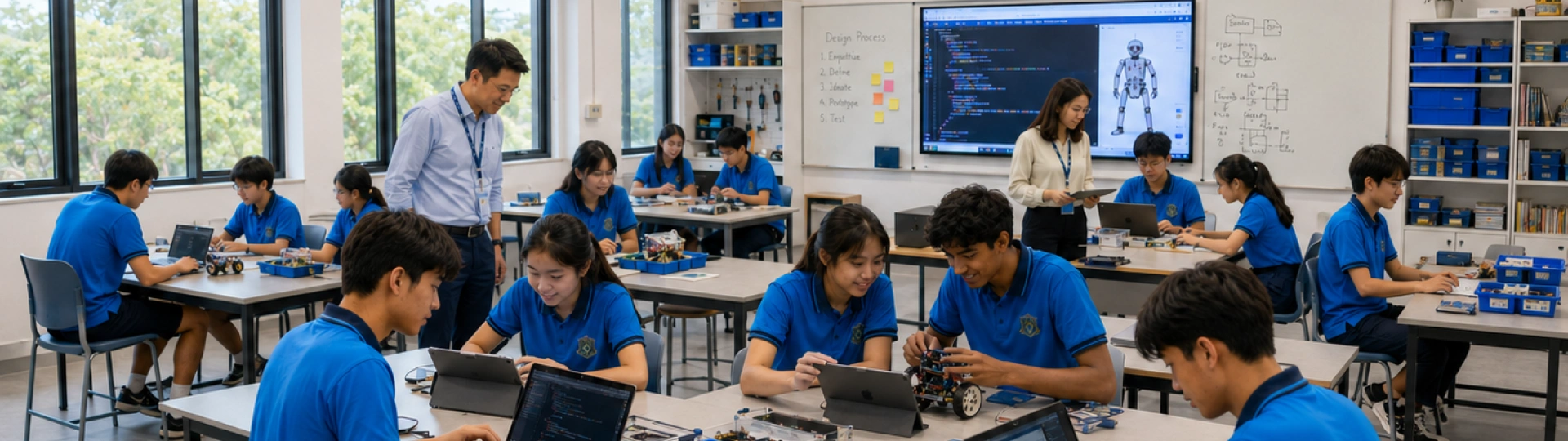
The Complete AI & Robotics Learning Ecosystem for Schools helps students move from understanding technology to creating with it through curriculum, practical coding, hands-on projects and opportunities to present their ideas.
- Curriculum
- AI Cloud Lab
- Robotics & AI
- Digital Fest
- International Exposure
A Complete Learning Journey
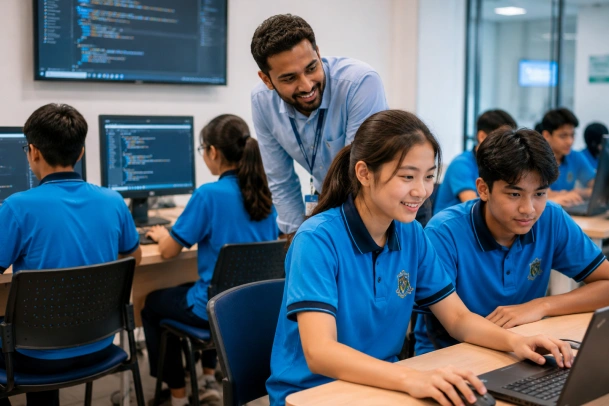
Students progress through conceptual learning, practical application, experiential projects and expression avenues, creating a connected pathway from knowledge to innovation.
Conceptual Learning
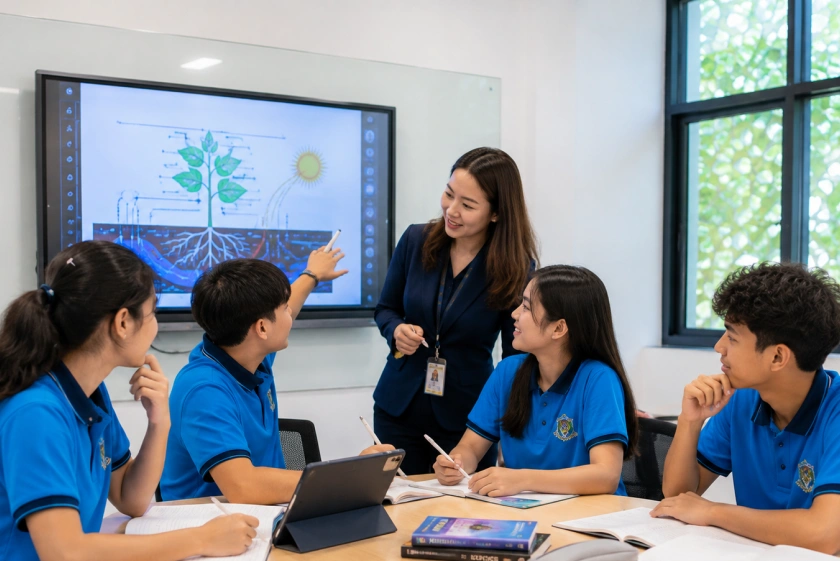
Students learn foundational computer science concepts through textbooks and digital content, building theoretical knowledge that supports hands-on projects. They transition from theory to practice with STEM, coding, AI, web, and IoT projects, which reinforce learning and inspire creativity, critical thinking, and problem-solving. These immersive experiences boost confidence and foster a passion for innovation, preparing students for success in a digital world.
- AI & Robotics
- Computational Thinking
- ICT
- Digital Skills
Text Books, AI & Robotics Curriculum + CT
Strong Foundations for a smarter future
Our learning advantage
- Traditional textbooks do not build 21st century skills.
- Students lack early exposure to AI, Robotics, and Computational Thinking.
- Schools need a structured, ready-to-teach technology curriculum.
- Teachers need ongoing support with digital resources and teaching materials.
- Teachers need advanced AI-powered tools for evaluation, assessment, and resource preparation.
- Teachers need continuous academic support throughout the entire academic year.
Curriculum-mapped grade-wise books integrate with educational frameworks to provide a cohesive learning experience in AI, Robotics, and Computational Thinking. Each grade builds knowledge progressively, featuring age-appropriate content aligned with modern standards.
Interactive elements enhance understanding, while the curriculum promotes critical thinking, problem-solving, and creativity. These resources empower educators to create innovative classrooms, preparing students for future challenges.
Curriculum Resources Shown
Users to Creators:
KS1 Year 2, English National Curriculum, Artificial Intelligence.
CBSE Handbook:
Computational Thinking, Grade 6.
Textbook of Artificial Intelligence:
Grade 9, National Education Policy 2020.
Experiential Learning
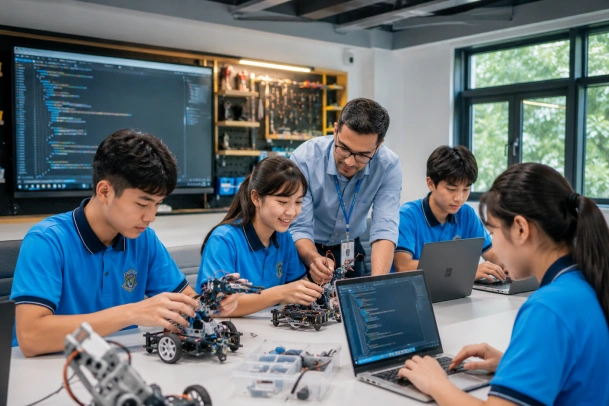
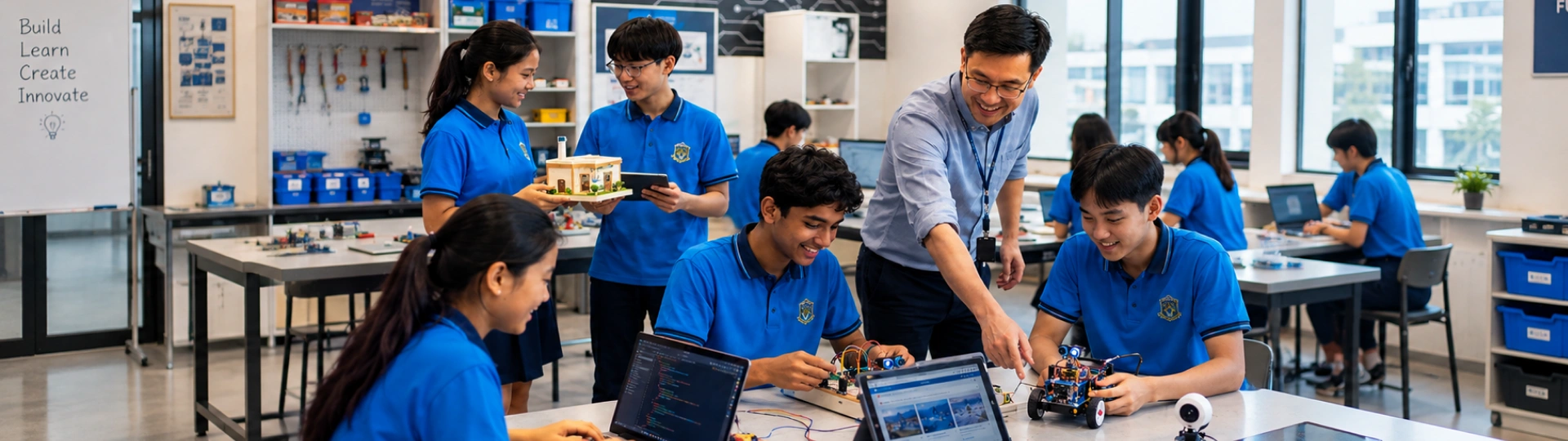
Students transform their ideas into real-world innovations using hands-on electronic components and robotics kits. By designing, building, and testing practical projects, they gain valuable hands-on experience, strengthen problem-solving skills, and develop the confidence to solve real-world challenges.
- STEM Projects
- Coding Projects
- Web Projects
- IoT Projects
- AI Projects
Learning Hardware
Practical Learning
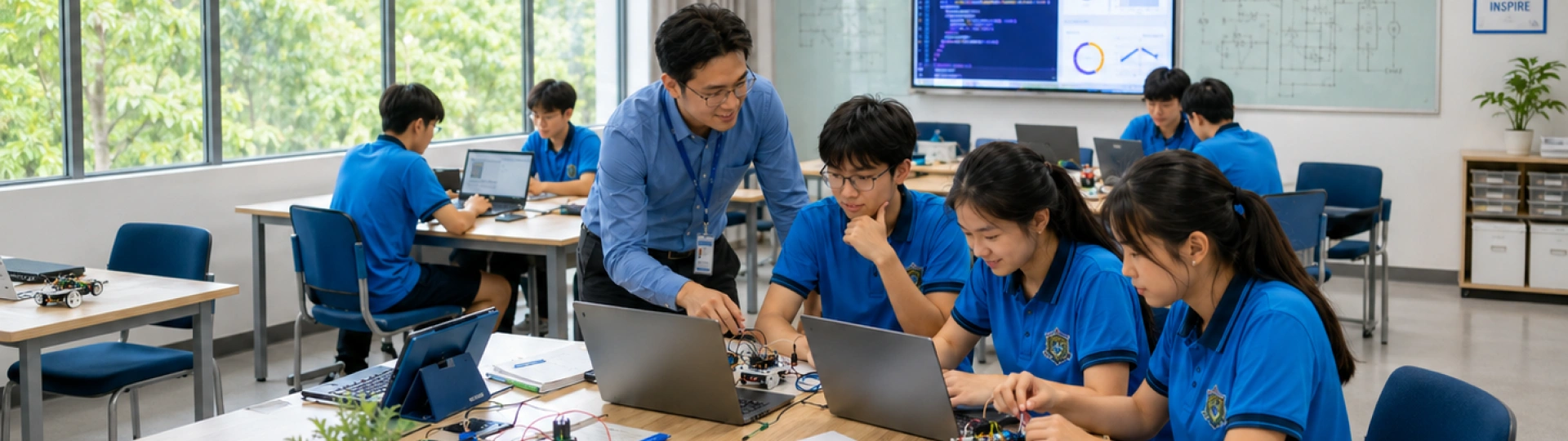
Students can access an AI Cloud Lab environment designed for coding, experimentation, assessment, and project development.
AI Cloud Lab Features
- LMS IDE
- Lab Assignment
- Coding Games
- Any Device
- Smart Board Features & Enhancements
- Access Anywhere
- AI Evaluation
- No Hardware
- No Installation
- Mobile App
Technologies & Platforms
- HTML5
- CSS
- JavaScript
- Python
- MIT App Inventor
- Scratch
- Arduino
- SQL
- micro:bit
Expression Avenues
The Digital Fest celebrates creativity at national and international levels, bringing together artists, designers, and innovators to showcase talents and explore the intersection of imagination and technology. Attendees can enjoy interactive exhibits, inspiring workshops, and engaging discussions, fostering a global community among creators. Whether a veteran or a newcomer, participants will find numerous opportunities to learn and be inspired by digital expression.
A Complete Ecosystem for Future-Ready Creators
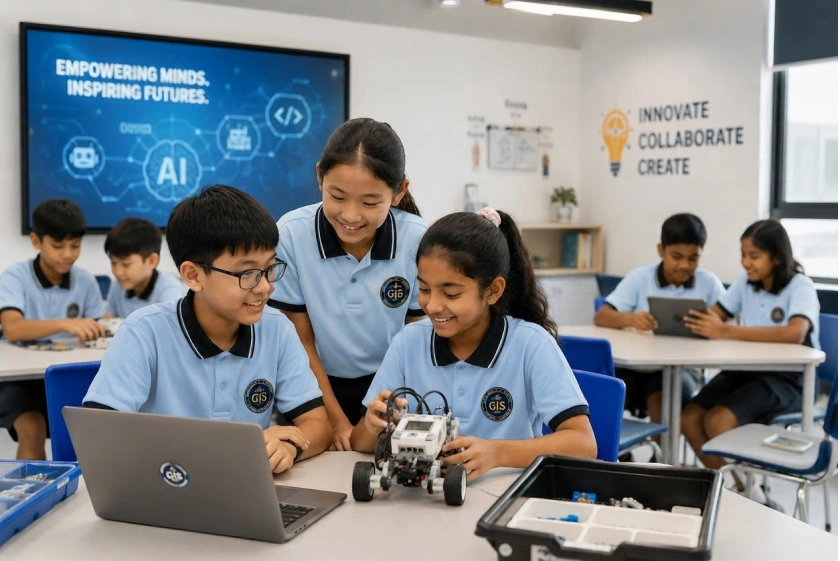
From conceptual understanding to practical application, experiential projects and global expression, students develop the confidence and skills needed to become creators of technology.